 Tea Mystery
序 The one idea
You have been told it is complicated.
Six vessels, a timer, water at the exact degree, and a feeling that somebody is about to tell you that you are holding it wrong. That is what gong fu looks like from outside.
From inside it is much smaller. Leaves, hot water, a bowl you like the weight of. You pour, you taste, you pour again, and the tea tells you what to change. That is the whole method. The rest is furniture you can buy later, or never.
七碗茶歌 The song of seven bowls
Seven bowls, after Lu Tong
Press and hold to pour.
- 一碗喉吻潤One bowl moistens lips and throat.
- 兩碗破孤悶Two bowls break lonely gloom.
- 三碗搜枯腸Three bowls search my withered gut,
and find only five thousand scrolls of words. - 四碗發輕汗Four bowls raise a light sweat;
the injustices of a lifetime stream out through every pore. - 五碗肌骨清Five bowls make flesh and bone clear.
- 六碗通仙靈Six bowls open communion with immortal spirits.
- 七碗吃不得也The seventh bowl I cannot drink:
I only feel a soft, clear wind rise beneath both arms.
The most important bowl is the one he does not drink.
Translation by Tea Mystery, after 盧仝, Quan Tangshi juan 388.
工夫 Begin
Three things. That is the list.
Everything else on the shelf solves a problem you do not have yet.
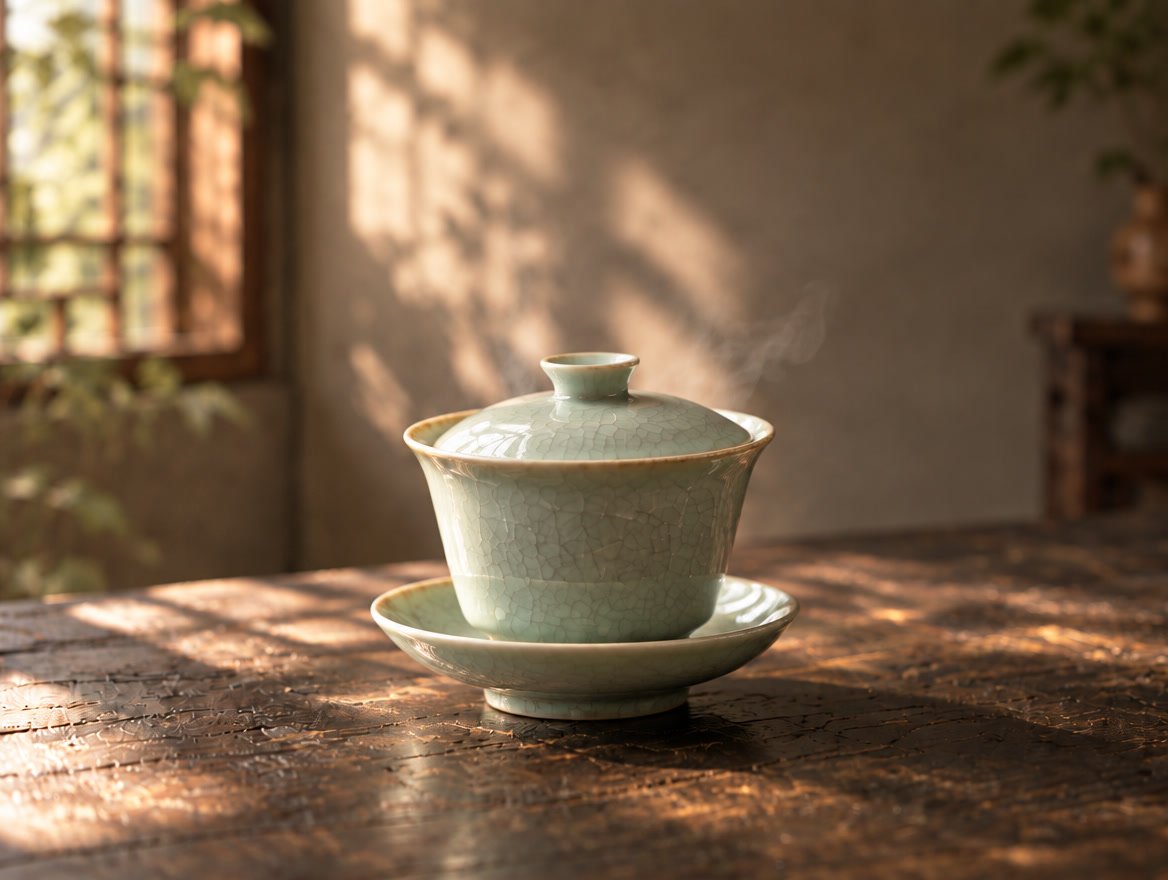
A lidded bowl. It brews the leaf and pours through its own lid. If you buy one thing, buy this. It is the vessel in our mark.
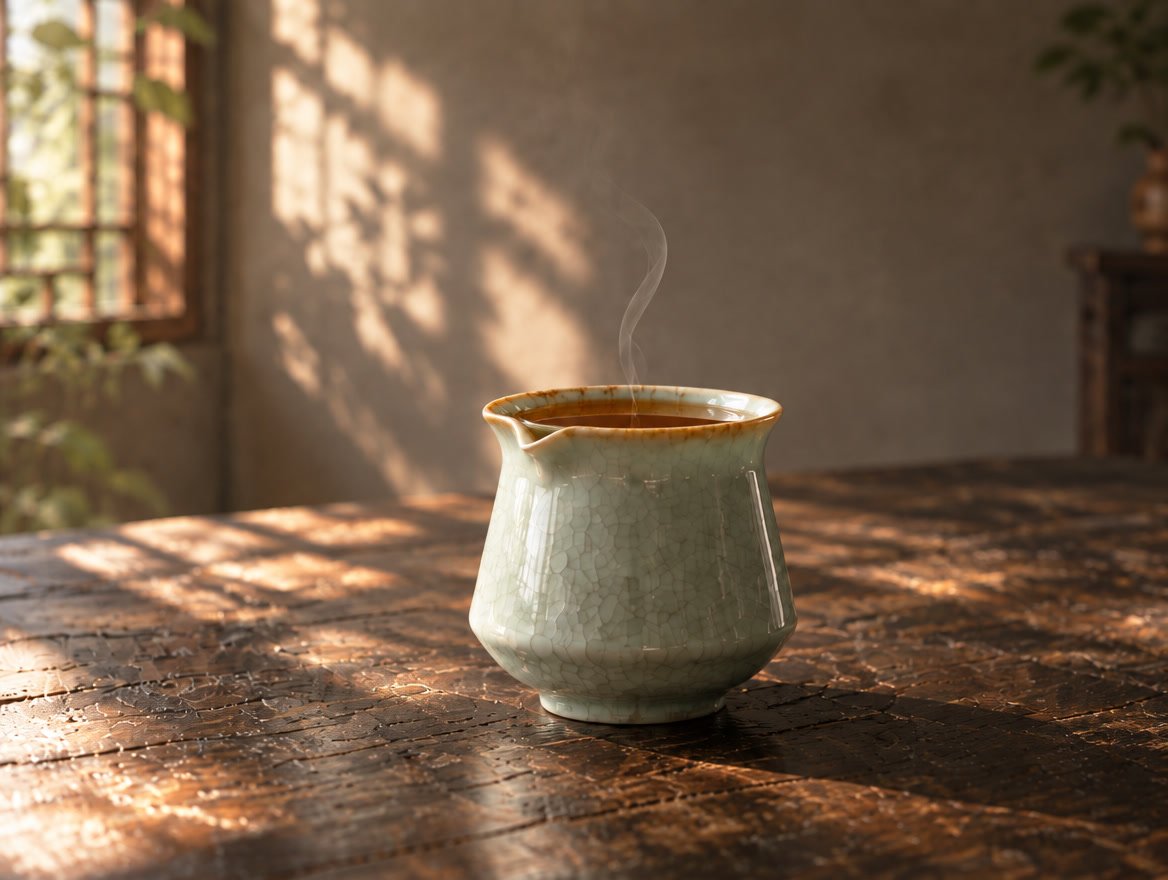
The fair cup. Everything brewed goes in here first, so the last cup poured is as strong as the first.
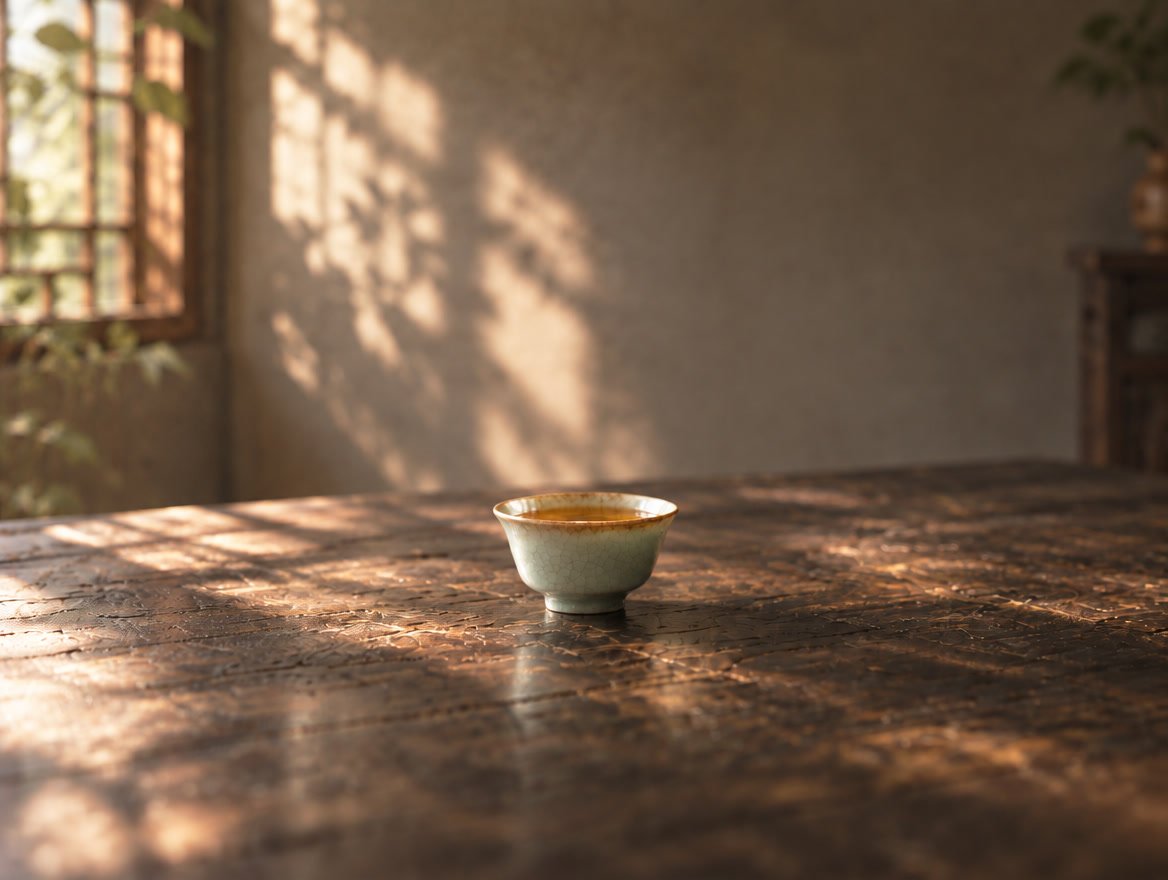
Small. Smaller than you think. You are meant to finish it in two mouthfuls and pour another.
Plus hot water, from whatever you already boil it in.
影 The channel
Sessions, not tutorials.
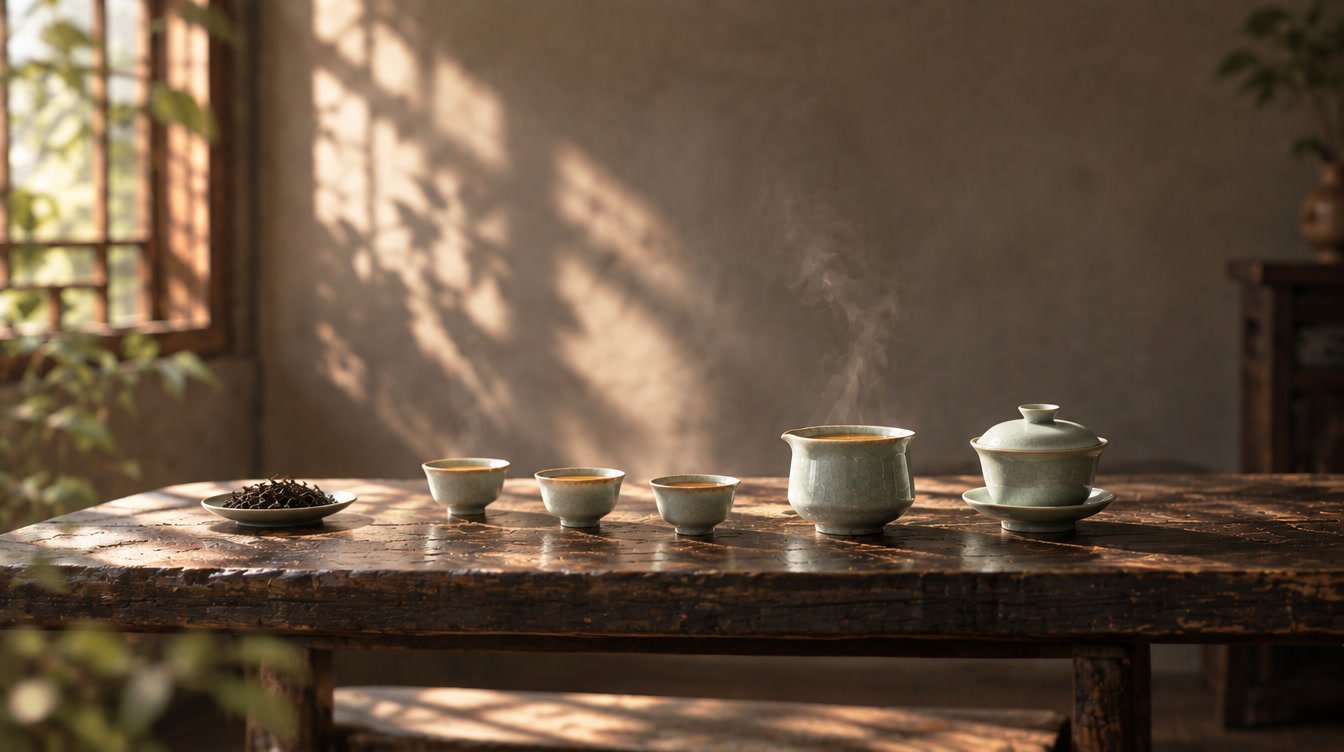
Long, quiet, mostly unspoken. One tea, one table, real time. People tell us they put it on to sleep, and we take that as the highest compliment a tea video can get.
New sessions when the tea is right.
文 The journal
Writing, between sessions.
Seven Bowls, One Conscience: What Lu Tong's Famous Tea Poem Really Means
A Tang poet drinks from thirst to transcendence, then asks who paid for the tea. Read whole, Lu Tong's Seven Bowls is not a quaint tasting note or a seven-cup prescription. It is a journey through body, mind, spirit, and moral responsibility.
Read the essayYour water is the problem, not your leaf
Ninety-nine percent of the cup is water. Almost nobody thinks about it for one second.
Coming soonWhy the second steep is the one that matters
The first pour is the leaf waking up. Everything you came for is in the second.
Coming soon問 Questions
Questions people actually ask
Do I need expensive teaware?
No. A plain porcelain gaiwan costs less than a week of takeaway coffee and will outlast most of your furniture. Clay and collectible pots are a pleasure, not a requirement, and they are much easier to enjoy once you already know what the tea should taste like.
Am I doing it wrong?
Almost certainly not. Gong fu is not a script with a pass mark. Brew, taste, adjust, brew again. If the cup is bitter, use less leaf or less time. That is the entire correction loop and you already know how to run it.
How is this different from just making tea?
Ratio and time. A lot more leaf, a lot less water, and steeps measured in seconds instead of minutes. The same leaf gives you six or eight different cups in a row instead of one. That is the trick, and it is the only trick.
Is this what Lu Tong was doing?
No, and we are careful about that. He drank ground cake tea cooked in a cauldron, centuries before anyone brewed this way. His bowls give us a vocabulary for what repeated steeps disclose. The honest relationship is analogy, not ancestry.
Where do I start?
A ripe pu-erh or a roasted oolong. Both are forgiving, both taste like something immediately, and neither punishes a clumsy first session.
How long does a session take?
As long as you want. Ten minutes is a session. Two hours is also a session. The tea does not mind.
一 The last question
Whose work is present in this cup?
Lu Tong begins with a dry throat and ends with a question for power. Who picked the leaf. Who processed it through the night. That is the part of the poem almost nobody quotes, and we try to keep it in the room.
Put the kettle on. Sit down. One bowl.
New sessions when the tea is right, and the journal in between.